Doctor Education and Support
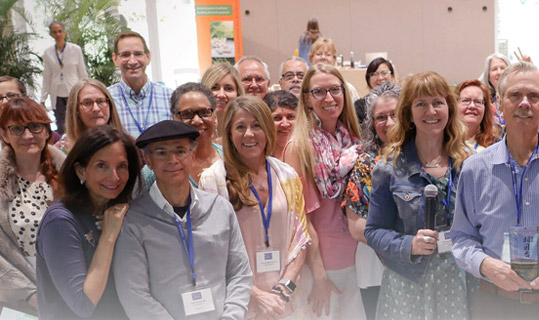
WTSmed hosts annual medical conferences on Restorative Medicine for doctors and professional health care practitioners. Topics include using the WT3 protocol for Wilson’s Temperature Syndrome, using WTSmed Supplements, and many other holistic and restorative approaches to health. The 6th Annual Conference is being held in Stowe VT, September 29 to October 3, 2008.
WTSmed provides free Practitioner Support by phone to physicians and other professional health care practitioners with questions regarding WTSmed supplements and WT3 therapy for Wilson’s Temperature Syndrome. Feel free to call us at 1-800-420-5801 with any medical questions or concerns.
Questions and Answers
- What is Restorative Medicine?
- Who founded RestorativeMedicine.com?
- What is Wilson’s Temperature Syndrome (WTS)?
- Dr. Wilson’s Story
- How Does Restorative Medicine Work?
- How Long does It Take?
- Plants as Medicine?
- In Summary
What is Restorative Medicine?
We coined the term Restorative Medicine to describe the use of natural substances to assist or recalibrate the body’s innate mechanisms so that the body is returned to a healthy equilibrium. The goal of Restorative Medicine is to offer patients the possibility of getting healthy and staying healthy even after they have finished the treatment.
Who founded RestorativeMedicine.com?
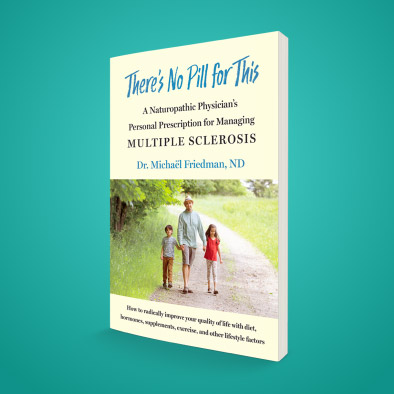
RestorativeMedicine.com is a collaborative effort between Denis Wilson MD, the founder of the WT3 protocol for Wilson’s Temperature Syndrome, and Michaël Friedman ND, a Naturopathic physician whose clinical practice focused on medical herbalism and endocrinology. Their backgrounds have given them both a passion for Restorative Medicine and the good it can do for people. This has inspired them to form RestorativeMedicine.com as a means to support and promote Restorative Medicine worldwide.
What is Wilson’s Temperature Syndrome (WTS)?
Wilson's Temperature Syndrome (WTS) is a reversible hypo-metabolic state in patients that are biochemically euthyroid, whether they are taking thyroid medicine or not. It can often be reversed with a specific protocol of prescription sustained release thyroid hormone known as T3 therapy. We've started calling that therapy “Wilson's T3” protocol, or “WT3” protocol for short, to distinguish it from different methods of using T3.
Dr. Wilson’s Story
More than 10 years ago, seeing patients with low thyroid symptoms and normal thyroid blood tests get better and stay better with the WT3 protocol changed my whole perspective on the function of the body and the validity of much of what was taught in medical school. Perhaps the most exciting aspect of WT3 protocol is not that it helps so many people feel so well when nothing else has, but that the symptoms often remain improved even after the treatment has been discontinued. This suggests that needed and beneficial changes are taking place that are helping to restore patients' health.
I met Dr. Michaël Friedman in 2001 when he was a Professor of Endocrinology at the University of Bridgeport Naturopathic Medical School. He was writing an endocrinology textbook and invited me to contribute to his chapter on Wilson's Thyroid Syndrome, and to be a guest lecturer on WTS for his endocrinology class. We also began working together on a research proposal, backed by a major medical college, on the use of WT3 therapy in the treatment of Chronic Fatigue Syndrome. Along the way, I became more familiar with Dr. Friedman's use of natural medicines (such as herbs), and was very intrigued by the results he was seeing.
Dr. Friedman wanted his own patients to get a very specific combination of herbs of sufficient quality and quantities to provide maximum benefits as conveniently and economically as possible. I have spoken with many patients of Dr. Friedman who have been quite surprised and delighted by how well his formulas work. Seeing that there are many substances (like those found in nature) that can be used to help the body recover has broadened my perspective. With so many viable tools at their disposal many doctors can actually be restoring health to many grateful patients, all day long.
We feel the term 'Restorative Medicine' describes well the kind of medicine these doctors are practicing. Currently, there are nearly 250 doctors on the list of treating physicians at wtsmed.com. If you would like to join the treating physicians list please call us at 800 420 5801.
Best regards,
Denis Wilson, MD
How Does Restorative Medicine Work?
Restorative medicine can often help people recover from a variety of so-called incurable
diseases. This is accomplished simply by assisting or recalibrating the body's built-in mechanisms, rather than circumventing them.
For example, imagine that while driving down the road you accidentally bumped your gearshift into a lower gear. Immediately, your car would slow down and the engine would sound louder and make a high-pitched sound. To correct the problem, would you put in earplugs to avoid the annoying sound and press harder on the gas to make up for the reduced speed? Or would you help your car back into the right gear? Stepping on the gas would only make the sound louder. Not only would you need stronger earplugs, but you would also be putting a lot of strain on your engine. These would be like side effects of a strategy that is only creating more problems for your car. On the other hand, helping the car back into gear would cause the speed and sound of your car to return to normal. Your engine would last longer, you'd get better gas mileage, and many other unforeseen benefits (i.e., more time to enjoy life and less time in the car repair shop).
These are side benefits of a strategy that is actually restoring the function of your car back to normal.
The body is so good at repairing itself that people usually only recognize a health problem as a medical condition if the body isn't able to recover from it on its own. For example, the common cold is something that the immune system can handle on its own. We consider it a normal part of life and not a real medical concern. On the other extreme, there are illnesses that cause permanent damage to the body such as when strokes cause paralysis, or type I diabetes destroys the pancreas. These are conditions from which the body rarely ever recovers.
There are still other conditions that are too severe for the body to overcome on its own, yet not so severe they have caused permanent damage. In this middle ground we find reversible illnesses. Restorative medicine is the art and science that can help the body overcome such illnesses.
One Improvement Can Lead To Another
The good news is that correcting a problem with one part of the body can relieve some of the strain on other parts. This can often lead to an upward spiral of restored health. Improving the metabolism can help organ function, and improving organ function can help the metabolism. When all of the organs and the metabolism are functioning well, the body is in a state of good health.
Restoring health is fundamentally different than treating symptoms- as so many doctors have been trained to do. When doctors don't treat the problem and just treat the symptoms, they have very little chance of correcting the problem.
How Long does It Take?
A good rule of thumb is that it may take 2 months of treatment for every year that you've been sick. Some people are back to normal within 2 or 3 months, but if you've been sick for a few years you might anticipate about 6 months of treatment. Nevertheless, the vast majority of patients feel much better within a year, even if they've been sick for 20 years!
The good news is that once the body actually does recover, it tends to stay well.
Plants as Medicine?
Thousands of years ago (before grocery stores and fast food restaurants), people used to take all kinds of plants into their diets in the form of soups and teas. They were exposed only to the natural substances their bodies were specifically adapted to. Today, we still put plants in our foods (lettuce, fruits, culinary herbs, etc.), but many plants beneficial to health are no longer eaten routinely. Instead, much of what we eat is not found in nature. Our bodies can easily become saturated with substances that didn't even exist 150 years ago. Our diets have been narrowed largely to that which is most profitable, not necessarily to that which is most beneficial. Little by little we have been changing our food and separating ourselves more and more from the environment upon which our health depends. Just think how different our food is today than it was 2,000 years ago, or 200, or even 70. Is it any wonder that chronic illnesses are so prevalent these days?
Just how specifically matched are plants and animals? Body functions are organized and carried out by organs. Likewise, the benefits of plants on the body can also be grouped by organs. For example, the same herb can help bring a high pulse down, and a low pulse up to normal.
Another herb can correct constipation or diarrhea. The plants help the organs to function better instead of masking symptoms. It seems evident that the function of animals and benefits of plants are specifically adapted to one another. Did you know, for example, that many animals know instinctively to eat certain plants when they are sick? In fact, humans have discovered medicines by analyzing the plants they observed gorillas eat when they were sick!
Restored organ function with just plants? Some people seem to have the impression that since plants/herbs aren't regulated like drugs and don't require a prescription like drugs, they can't make much of a difference. That's a misconception.
Drug regulation was never meant to indicate that herbs don't work and that drugs do, but to try and make sure that drugs were safe and effective enough to be allowed on the market. Herbs were found in nature and present in the food supply and were already known to be safe.
Consequently, they have not yet been regulated like drugs are.
If herbs are so effective, why would companies be so anxious to introduce man-made drugs? One big reason is that they can be patented. They are not found in nature. A patent gives the drug company a chance to make a lot of money. However, tampering with nature can be very risky. In fact, many big laws in drug regulation were signed into law only after large-scale drug disasters.
Herbs can have medicinal effects on the body. Herbs have been used for centuries, and were the medicines doctors and pharmacists used before patented drugs came along. Many prescription drugs on the market today still have compounds extracted from plants as their primary ingredient.
Interestingly, doctors in other countries that are experienced with herbs shake their heads at the American mentality. They laugh that Americans will take a nontoxic herb that has very beneficial properties and then try to isolate the active ingredient
, assuming there is only one. The other compounds in the plants that are discarded are apparently very beneficial because the isolated ingredient often has less restorative effects and causes greater side effects than the herb itself.
Why would Americans do that? One explanation is that a single, isolated ingredient can be patented as it is or with a slight modification, whereas, a whole plant cannot be. Another issue is that isolated ingredients might be very effective at treating a specific symptom but may not be enough by themselves to correct an underlying problem. This actually makes them even more profitable because if a drug can mask symptoms for a time patients may say, Boy, that really works.
And they'll buy the drug over and over again because the symptoms come back and the drug makes them go away. On the other hand, if they take a treatment that actually cures them they could conclude, Boy, I guess I wasn't really that sick.
And they don't need to buy the treatment anymore.
In Summary:
Whole Plant Concentrates
- can be more beneficial in restoring health
- can have fewer side effects
- can have side benefits
Whereas Isolated Compounds
- are not yet patented and therefore are not as profitable
- can be less restorative
- have greater side effects
- are more profitable (because of patenting and advertising)
It's gotten to the point that many doctors and patients don't consider a medicine or illness real unless it's for life.
But how much more real is treatment that actually corrects illness and restores health to normal so that the symptoms actually go away for good?
Although patients can often start feeling better with plant medicines within the first few days, it can sometimes take a couple of weeks before symptoms noticeably improve. Or the improvements can come and go a little, while continuing to improve overall. Some can occasionally feel a little worse before they feel better. Consequently, when people want to try plant based medicines we suggest that they decide beforehand to try taking them daily for a month or two, not a day or two.
If the idea that symptoms can come and go a little and might even get a little worse while you're recovering doesn't sound good to you, then it will be easy for you to see why just treating symptoms
is so popular among doctors and patients. But remember, because Restorative Medicine is fundamentally different from what you may be used to, it may also be the approach that finally helps you recover your health.
Our commitment to the environment:
At RestorativeMedicine.com we are very concerned about the health of our environment and we are aware of how profoundly the environment affects health. We are striving to minimize our ecological impact by using glass bottles that are easily recycled, by printing on 100% post-consumer recycled paper, and by recommending only certified organic, ecologically grown, and ethically wild crafted sources. We are members of United Plant Savers, an organization dedicated to the conservation of medicinal plants in their native habitat, and exclude wild crafted plants that are on the UPS At-Risk list from our formulas. We are deeply grateful for the earth from which these medicines came, the plants that are used in our medicines, and the traditional herbal wisdom of all cultures.